
Diabetes is often treated as a single condition, but Type 1 and Type 2 diabetes have significant differences in their causes, symptoms, and management. Understanding these differences is important for approaching diabetes care, diet, and daily habits appropriately.
Type 1 diabetes is an autoimmune condition in which the immune system attacks the insulin-producing cells of the pancreas. As a result, insulin production stops, making insulin therapy essential. Type 1 diabetes commonly develops during childhood or teenage years, although it can occur at any age. Symptoms may appear quickly and include excessive thirst, frequent urination, unexplained weight loss, constant hunger, and fatigue.
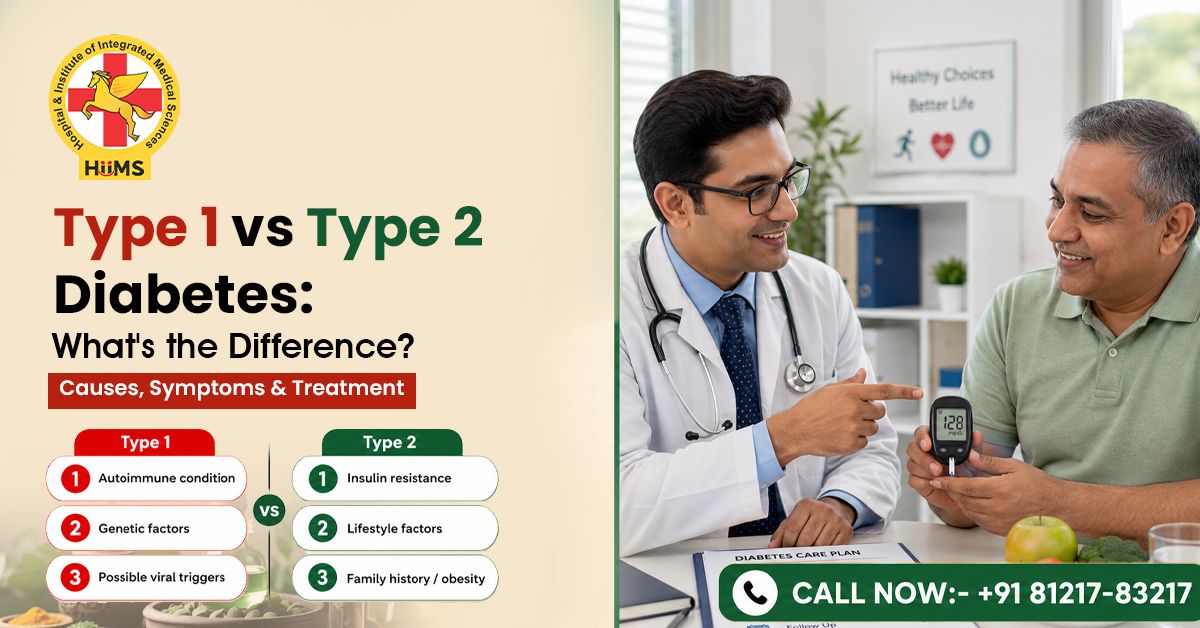
Type 2 diabetes develops differently. The body continues producing insulin, but its cells become less responsive to it, a condition known as insulin resistance. Type 2 diabetes generally develops gradually and may be associated with genetics, family history, extra body weight, physical inactivity, sedentary habits, and long-term eating patterns. Because symptoms can develop slowly, some people may remain unaware of the condition for years.
The treatment approach also differs. Insulin is essential for Type 1 diabetes and should not be replaced or reduced without direct medical guidance. Ayurvedic care may provide supportive dietary guidance, traditional herbs, and stress management alongside insulin therapy.
For Type 2 diabetes, lifestyle correction can play an important role. Ayurvedic supportive approaches may include personalized diet planning, regular routines, herbs such as bitter gourd, fenugreek, and Gudmar, stress management, and Panchakarma-based therapies. These approaches may be used alongside prescribed medication and recommended lifestyle changes.
At Jeena Sikho HiiMS Derabassi, the approach begins by understanding whether a person has type 1 or type 2 diabetes. For Type 2 diabetes, care may include a personalized pH-balanced diet plan, herbal support, and Panchakarma-based therapies. For Type 1 diabetes, the focus remains on nutrition, stress management, supportive care, and general strength alongside ongoing insulin therapy.
Understanding Type 1 vs Type 2 Diabetes can help you recognize why their management approaches are different. If you are looking for personalized Ayurvedic support alongside your existing diabetes care, you can book a VOPD consultation with Jeena Sikho HiiMS Derabassi.
Read the full blog to learn more about the causes, symptoms, treatment options, and differences between Type 1 and Type 2 diabetes.